
Nullam dignissim, ante scelerisque the is euismod fermentum odio sem semper the is erat, a feugiat leo urna eget eros. Duis Aenean a imperdiet risus.
Loading
Nullam dignissim, ante scelerisque the is euismod fermentum odio sem semper the is erat, a feugiat leo urna eget eros. Duis Aenean a imperdiet risus.
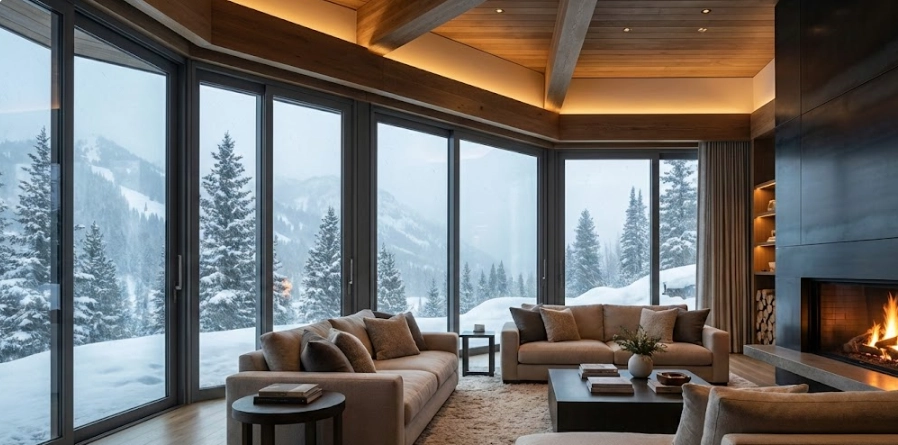
As the world-building field speeds up to meet harder green aims, 2026 stands as a key year for house rules. Homeowners, builders, and workers now look past looks, and they focus on power saving and lasting work. The time of taking big power costs from the bad heat hold is ending. In this setting, thermal break aluminum windows stand out as the top pick for new houses. But finding your way through the tech numbers, mainly the U-value, can feel hard. This help breaks down the top U-value rules for 2026, and it shows the tech behind them, while also showing how our fixes fit these tough needs.
At Yuxinyuntong, we do more than make goods; we act as a work company set to study, build, and send top house items around the world. With main work on doors, windows, and side walls, our group runs with a firm hold on good work. We set up our main name, HuaXiaXinBao, to act as the base of this hold, and it makes sure the right tech rules in each good we send. We stick to two main ideas: giving top system goods and adding close tech help, from sell-before talk to sell-after aid. Our long-term goal is to bring smart, green growth to the world house field. By cutting power use with good goods, we give end users a nice, safe, and earth-kind live space. When you team with us, you pick a group that sees time and tech skills as equal.
To select the best energy-efficient windows, you must first master the primary metric: the U-value (or U-factor). Simply put, the U-value measures the rate of heat transfer through a structure, divided by the difference in temperature across that structure.
The logic is straightforward: a lower U-value indicates better insulation. It means less heat escapes your home during winter and less heat enters during summer.
For 2026, the industry benchmark for energy efficiency has reached a new peak. While older aluminum windows often suffered from high thermal transmittance—leading to condensation and significant energy loss—the premier standards for modern high-end projects now demand an Imperial U-value between 0.2 and 0.3 BTU/(h·ft²·°F). In metric terms, this equates to a K-value of approximately 1.0 W/(m²·K) for the entire window system.
In colder regions or passive house projects, these requirements can drop even further to ensure maximum thermal retention. Achieving such elite performance is impossible with traditional aluminum profiles; it requires advanced engineering and specific material technologies, such as PA66 nylon thermal breaks, designed to effectively “break” the thermal bridge and minimize heat transfer.
Achieving an Imperial U-value as low as 0.2 requires a holistic approach to engineering:
Standard aluminum is highly conductive, meaning it transfers heat rapidly. To stop this, we utilize “thermal break” technology. This involves inserting a non-conductive material between the interior and exterior aluminum profiles.
The critical differentiator in 2026 is the material used for this break. We utilize PA66 nylon strips (Polyamide 66) rather than cheaper PVC alternatives. PA66 is the gold standard for thermal insulation strips because its coefficient of linear expansion matches that of aluminum alloy. This ensures that when temperatures fluctuate drastically, the strip and the frame expand and contract at the same rate, maintaining structural integrity and preventing deformation. This technology effectively blocks heat transfer, significantly lowering the frame’s U-factor.
The glass makes up the largest surface area of the window, making its performance vital. To meet the high standards of 2026, single glazing is obsolete. The standard is now Insulated Glass (Double Glazing) or even triple glazing for extreme climates.
We construct these units by sealing dry air or inert gas (like Argon) between two panes of glass. Furthermore, applying a Low-E (Low-Emissivity) coating to the glass surface reflects infrared light, keeping heat inside during winter and outside during summer. This combination of thermal break frames and high-performance glass is the only way to achieve the strict U-value requirements of modern green buildings.
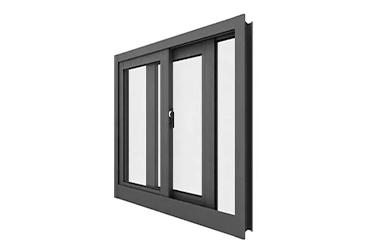
Translating these technical standards into a physical product requires precision manufacturing. We have engineered a solution that not only meets but often exceeds the anticipated 2026 energy standards, while also addressing the need for space efficiency in modern architecture.
Our 85-Series Broken Bridge Aluminum Profile Sliding Window represents the pinnacle of this engineering. This product is specifically designed to achieve an Imperial U-value of 0.2–0.3 BTU/(h·ft²·°F)—equivalent to a Metric K-value of approximately 1.0 W/(m²·K) —placing it firmly at the forefront of high-performance, energy-saving window technology for 2026.
Unlike casement windows that swing out and occupy space, this sliding series is perfect for balconies, small apartments, and areas where furniture placement is tight. However, sliding windows historically suffered from poorer sealing than casement types. We have solved this.
Based on the latest laboratory test results (compliant with AAMA/WDMA/CSA 101/I.S.2/A440-17), the performance metrics are as follows:
| Key Performance Indicator | Rating / Value | Real-World Benefit |
| U-Value | 0.22 BTU/(h·ft²·°F) | Maximizes thermal retention, significantly lowering energy bills. |
| Air Leakage Resistance | 0.13 L/s·m² (A3 Level) | Effectively stops drafts and prevents air infiltration. |
| Water Penetration | Passed at 360 Pa | Resilient against heavy rain; ideal for coastal areas. |
| Uniform Load (Wind) | Design Pressure +2400 Pa:
0.6mm(maximum deflection at stile at handle side)/0.1mm(maximum deflection at bottom rail) Design Pressure -2400 Pa: 0.6mm(maximum deflection at stile at handle side)/0.2mm(maximum deflection at bottom rail) |
Ensures structural stability in high-rise buildings |
| Operating Force | Initiation: 36 N / Maintain: 23 N | Extremely low resistance for smooth, one-handed operation. |
| Sound Insulation | Calculated Sound Transmission:STC44
Outdoor-indoor transimission class:OITC 37 |
Creates a quiet sanctuary even in busy urban environments |
By joining the PA66 thermal break with a strong slide part, we give a good solution that saves space without losing on heat rules.
While the U-value is critical, it is not the only factor that defines a “best” window. In the global market of 2026, certifications validate performance claims. A low U-value on paper means nothing if the product has not been rigorously tested by third-party authorities.
We ensure our products align with the US Market NFRC Certification (National Fenestration Rating Council). This is the leading standard in North America for objectively rating the energy performance of windows, doors, and skylights. An NFRC label provides verified data on U-factor, Solar Heat Gain Coefficient (SHGC), and Visible Transmittance.
Furthermore, for our European and Australian clients, we comply with EU Market CE Certification and Australian AS/NZS Standards (such as AS/NZS 2047). These certifications test for wind load resistance, water penetration, and structural integrity. For high-rise buildings, our windows are tested to withstand wind loads of Grade ≥ 5, ensuring safety during typhoons or severe storms.
Putting cash in small U-value windows is a long pick. So the body’s longevity of the stuff counts as much as its heat parts.
We use top aluminum alloy profiles worked by power move and power dust coat. This face fix does more than give a clean, new look; it makes a guard from rust. If your work is in a wet beach spot or city with sour rain, these coats make the window edge keep its strength and look good for years.
This long run adds to the good’s full green side. By fighting rust and part wear (our parts test for over 10,000 open runs), we cut the need for new ones, so we lower the environmental impact from making and moving.
Pick the right window sender is more than buying a good one; it is about getting a team that knows the hard parts of the 2026 house world.
Our main name, HuaXiaXinBao, shows a mix of right build and steady send. We know building work runs on tight times. Our make lines are set to make sure the time, and they meet even quick work ends without loss on good check.
We give wide change picks to fit your build plan. If you need set edge colors to match a face, special glass sets for hiding (like dull or color glass), or custom sizes from small look holes to big slide doors, our tech group is set to help. We give full help, with a sell-before talk to aid pick right U-value set for your local weather rules, and a sell-after aid to make sure your set works as planned.
As we look toward 2026, the definition of a “good” window has evolved into a multifunctional thermal barrier, structural asset, and design centerpiece. The best thermal standards now demand an Imperial U-value of 0.2–0.3 BTU/(h·ft²·°F). These elite ratings are achieved through the strategic integration of thermal break aluminum and high-performance PA66 nylon strips, which effectively eliminate thermal bridging.
Our 85-Series joins these heat skills with the real wins of a slide build, giving a fix that saves power, room, and world papers. By picking us, you put in a house that fits your future with a focus on nice, green, and worth.
If you are set to lift your work with windows that meet hard needs of tomorrow, we ask you to reach out. Touch our group today for a tech talk and custom price.
Q: What is considered a “good” U-value for aluminum windows in 2026?
A: For 2026 standards, a U-value of 0.2–0.3 BTU/(h·ft²·°F) is considered the benchmark for high-performance thermal break aluminum windows. This level ensures significant energy savings and compliance with most modern green building codes, whereas passive house projects may require even lower values around 0.8 to 1.0.
Q: Can sliding windows really offer good soundproofing compared to casement windows?
A: Yes, modern high-end sliding systems like our 85-Series are engineered to overcome traditional sealing issues. By utilizing high-quality EPDM sealing strips and double-pane insulated glass, these windows achieve a Sound Insulation Grade: Calculated Sound Transmission:STC44;Outdoor-indoor transimission class:OITC 37, making them highly effective at blocking traffic and urban noise.
Q: How does the PA66 thermal strip differ from standard PVC strips?
A: Compared to PVC, PA66 is structurally stronger. Since its coefficient of expansion closely resembles that of aluminum, it expands and contracts with the frame at extreme temperatures and goes back to original form without deformation. Over time, PVC strips have been known to become brittle or loose, interfering with a window’s thermal break and overall structural integrity.













Leave a comments